

Make Movement a Habit
We have all done it: the big January plan, the new shoes, the five-day-a-week schedule that looked great on paper. By February, it’s quietly gone.
Here is the good news: the people who stay active for years usually are not the ones with the most intense workouts; they are the ones who found movement they could repeat, even on a busy week.
You do not need an hour a day
The national target for adults is 150 minutes of moderate activity a week, which works out to about 30 minutes, five days a week. Three 10-minute walks count, so does a lunchtime class or an evening swim. Experts also say that if you are starting from zero, you should build up gradually over weeks, not days.
That is the heart of a lifestyle approach: progress over perfection, and showing up more often than you skip.
Why it matters even more in November
November is National Diabetes Month, with World Diabetes Day on November 14 — a timely reminder of what regular movement can do.
Prediabetes means blood sugar is higher than normal but not yet high enough for a type 2 diabetes diagnosis which is common. The National Institute of Diabetes and Digestive and Kidney Diseases reports that more than 1 in 3 U.S. adults have it. The encouraging part is that lifestyle changes can prevent or delay the progression to type 2 diabetes, and regular physical activity is a big piece of that.
Activity helps the body use insulin more effectively, supports healthy blood pressure and cholesterol, and makes it easier to manage weight. For people with prediabetes, losing a modest 5–7% of body weight can also lower the odds of developing type 2 diabetes. If you would like structured support, the CDC-recognized National Diabetes Prevention Program offers it, or your doctor or health plan can point you to a local option.
If you have diabetes or prediabetes, talk with your health care provider before changing your activity routine.
Five ways to make it stick
- Put it on your calendar. Treat a workout like any other appointment. Mayo Clinic suggests making time to move every day, even if the time of day shifts.
- Start smaller than feels necessary. Short sessions count, and a routine you can keep builds momentum faster than a heroic one you cannot.
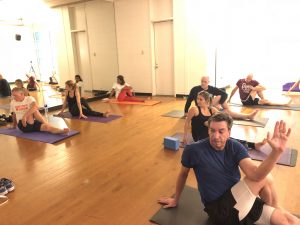
- Pick something you actually like. Dance-style classes, cycling, yoga or swimming: you will keep coming back to what you enjoy.
- Bring a buddy. Making changes with a partner or a group makes them easier to keep, and a class gives you built-in accountability.
- Track your wins. Jot down what you did each week. Seeing the streak grow is its own motivation.
How YWCA Central Carolinas can help
Variety makes consistency easier. At the YWCA fitness center on Park Road, you can mix group exercise classes, cardio and strength training, and time in the indoor heated pool. Water-based exercise is low impact and can be a good fit for people managing chronic conditions, including diabetes. On days when your joints or energy are low, the pool can keep your streak alive.
Our goal is simple: help you keep moving.
Start a four-week streak
Choose a goal you can hit, like three classes or workouts a week, and stick with it for four weeks. You can adjust and build from there. Learn more.
This article is for general information and isn’t medical advice. Consult your health care provider before starting or changing an exercise program.
Sources
- CDC, “Adult Activity: An Overview.” https://www.cdc.gov/physical-activity-basics/guidelines/adults.html
- U.S. HHS, Physical Activity Guidelines for Americans (summary of adult guidance and gradual progression). https://dcp.psc.gov/ccbulletin/articles/Fit_For_Duty_10_2009.aspx
- ODPHP / NIDDK, National Diabetes Month and physical activity. https://odphp.health.gov/news-archive/tag/diabetes/index.html
- Johnson County (KS) Livewell, summarizing CDC prediabetes guidance (150 minutes per week, 5–7% weight loss, National DPP). https://jocogov.org/department/health/livewell-johnson-county/blog/prevent/november-national-diabetes-month
- Mayo Clinic Staff, “Exercise and stress: Get moving to manage stress” (scheduling and short bouts). https://www.mayoclinic.org/healthy-lifestyle/stress-management/in-depth/exercise-and-stress/art-20044469
- CDC Healthy Swimming (water-based exercise and diabetes). https://www.cdc.gov/healthywater/swimming/materials/socialmedia-library.html